
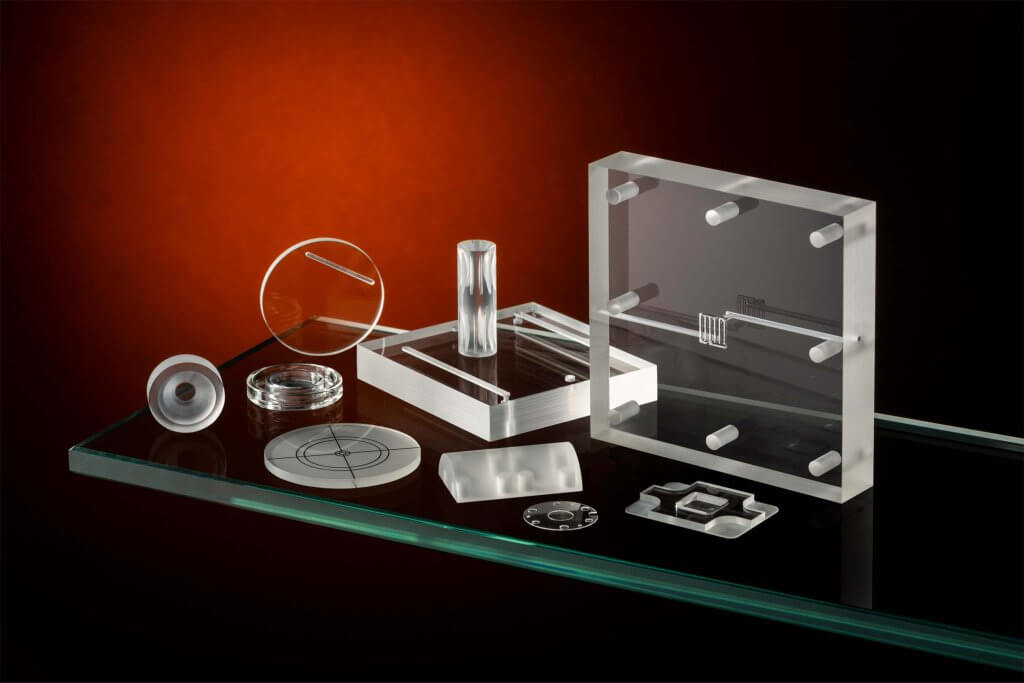
 Low Expansion Glass—comprising premium materials like Schott Zerodur®, Corning ULE®, and Ohara Clearceram-Z®—is a specialized class of glass and glass-ceramics renowned for its near-zero coefficient of thermal expansion (CTE). Manufactured through highly controlled thermal and chemical processes, these ultra-low expansion materials offer an unparalleled combination of absolute dimensional stability, exceptional internal homogeneity, and outstanding polishability, making them the ultimate choice for the most demanding precision engineering and scientific applications.
Their advanced compositions ensure that these materials maintain their exact shape and volume even when subjected to significant temperature fluctuations. Whether utilizing the glass-ceramic matrix of Zerodur and Clearceram-Z or the titania-silicate structure of ULE, these materials provide extraordinary surface quality and internal uniformity. They are available in various forms and sizes, catering to diverse, high-tech industrial needs where even nanometer-scale changes in dimension are simply unacceptable.
With an exceptional balance of extreme thermal stability, mechanical rigidity, and processing versatility, Low Expansion Glass is widely used across advanced industries requiring absolute precision and reliability in fluctuating thermal environments.
Characteristics of Low Expansion Glass:
- Near-Zero Thermal Expansion: A remarkably low coefficient of thermal expansion (CTE) ensures absolute dimensional stability even under significant temperature shifts.
- Exceptional Dimensional Stability: Maintains critical tolerances and shape over long periods, crucial for ultra-precision applications where thermal drift must be eliminated.
- Outstanding Homogeneity: An extremely uniform internal structure minimizes optical distortion and stress birefringence.
- Superior Polishability: Capable of being polished to extreme surface accuracy and sub-nanometer roughness, essential for high-end optics and mirrors.
- High Mechanical Rigidity: Excellent stiffness and mechanical strength provide reliable, deflection-free performance in structural components.
- Good Chemical Durability: Resistance to various chemical agents ensures long-term integrity during rigorous cleaning, coating, and processing cycles.
- Non-Porous and Vacuum Compatible: A dense, non-porous material structure makes it highly outgassing-resistant and ideal for ultra-high vacuum (UHV) environments.
- Broad Temperature Operating Range: Designed to perform consistently and retain structural integrity across a wide spectrum of operating temperatures.
- Versatile Machinability: Can be precision-machined, ground, and polished to create complex geometries, lightweight structural honeycombs, and intricate components.
Top Five Industries and Applications of Low Expansion Glass:
- Aerospace and Astronomy:
- Large telescope mirrors and orbital satellite optical systems.
- Lightweight space-bound structures require absolute stability in the extreme temperatures of space.
- Semiconductor Manufacturing:
- Substrates for Extreme Ultraviolet (EUV) lithography photomasks.
- Wafer chucks and stage positioning components for advanced metrology and inspection equipment.
- Precision Optics and Photonics:
- Laser cavities, resonators, and mirror substrates for high-energy laser systems.
- Reference standards and precision structural components for interferometers.
- Metrology and Measurement:
- Length standards, gauge blocks, and precision reference plates.
- Structural frames and base plates for high-precision coordinate measuring machines (CMMs).
- Advanced Scientific Research:
- Components for ring laser gyroscopes and precise navigation systems.
- Mounts and fixtures for highly sensitive analytical instruments requiring zero thermal drift.
Low Expansion Glass—including Schott Zerodur, Corning ULE, and Ohara Clearceram-Z—is an indispensable class of materials that meets the exactingly tight tolerances of modern innovation. Its near-zero thermal expansion, phenomenal dimensional stability, and superior surface quality make it a critical component in cutting-edge technologies across the most advanced high-tech sectors.
SGP is a trusted leader in precision glass machining and fabrication, backed by years of expertise working with ultra-low expansion materials like Schott Zerodur®, Corning ULE®, and Ohara Clearceram-Z® across a wide range of industries and applications.
Whether you’re seeking more information about these high-performance materials, or need a quote for your specific project, our team is here to help. Contact us today with your questions or requirements—we’re ready to support your application from concept to completion.